Es mostren els missatges amb l'etiqueta de comentaris informació. Mostrar tots els missatges

dissabte, 7 de març del 2015

Que comenci l'acció! -Bring the action!


He promès a una amiga que si feia una foto d'un
lluer on es veiés l'espècie la penjaria, així que
algun dia s'ha de fer

I've promised a friend that if she could take a photo 

of a Siskin I'd post it.Here it is, some things 

just have to be done.
El dijous vaig veure la primera oreneta cuablanca de l'any! I què passa? Doncs que l'hivern ja s'ha acabat. El temps segueix igual, però ja es nota que arriba la migració (i la feina)! Per mi, el que marca l'inici d'aquesta estació són l'arribada de la primera oreneta, el primer còlit i el primer milà. Ja fa dies que els tords no paren de cantar, les gavines han començat a mudar i les cogullades també comencen a buscar parella. M'encanta aquesta època, quan ningú nota la primavera a part dels ocells, i tothom qui els sap observar.

Tot això fa venir ganes de sortir a veure la situació, però he passat unes setmanes ocupadíssimes...per sort, entre ahir i avui he aconseguit trobar unes hores per sortir a veure què es movia. Les últimes titelles, els darrers pardals de bardissa...i les primeres rapinyaires migradores! A les fotos podeu veure un resum d'espècies!

Aegithalos caudatus
Turdus philomelos
Adorable! -Such a cutie <3


I saw my first Sand Martin of the year two days ago! That means winter is over (yay)! The weather is still quite cold here, but I can feel migration (and I can feel the work it means too). For me, the first sighting of Sand martin, Black kite and Northern wheatear mark the beginning of spring. During the last weeks, songies haven't stopped singing, gulls have started to change their plumage, and Crested larks have been looking for a partner. I love this time of the year, when no one feels the spring apart from birds and birders. I've spent some weeks without even patch birding, due to the exams, birthdays and various other stuff, and that can be really stressful, so I managed to get out yesterday's evening. I chaught up with the last Meadow pipits and Dunnocks...and the first migrant raptors! Here's some of my photos.

L'arribada de la primavera també vol dir treure la menjadora, que aquest any ha tingut més èxit que l'any passat. Majoritàriament hem tingut caderneres, pardals, pit-roigs i mallerengues, i de vegades es barallaven pel menjar, i la veritat és que era força graciós...En fi, durant l'hivern he estat censant les caderneres i la resta d'ocells a certes hores, i ara he fet aquesta gràfica, per veure una mica en quines hores hi ha més activitat a les menjadores. Sincerament, creia que els matins triomfarien, però els resultats diuen que com més avança el dia, més ocells. El que és segur és que les menjadores atreuen els ocells fins molt a prop, i les fotos surten brutals!

The beginning of spring also means taking off the feeders, which, btw, have had much more success than last year. I've had tons of European goldfinches, some Robins and also few Tits and House Sparrows. Goldfinches have been fighting for the food all winter, and that was ridiculously hilarious tbh. Anyway, I've been counting the number of birds at different hours (nearly) every day this winter, and I've made a fancy-looking (or not so fancy) chart which shows the hours with more activity. Tbf, I thought that the highlight would be at the early morning, but it looks like the hours after midday are the best ones for feeders. To have at least one brings the birds close to you, and the photos just look so good!


Totes menjant al terra mentre una es monopolitzava la menjadora...
They were all eating at the floor while queen golfinch was at the feeder...

Mireu la seva pàgina clicant la foto
Visit their website by clicking here

Per acabar, d'aquí a molt poc (just quan jo vaig a Itàlia!) hi ha la competició "Champions of the Flyway", i un equip de Next Generation Birders participarà per recollir diners per la conservació de les aus a Xipre. Espero que l'esforç recompensi i que sigueu els guanyadors, molta sort! També he vist que hi ha un equip català, així que també els desitjo sort!
FYI, The Champions of the Flyway is a cometition that will run in a few weeks (Yay I'll be in Italy by then), and its aim is to raise money for bird conservation in Cyprus. A team of four Next Generation Birders is taking part, so I wish them a lot of luck and I really hope they win! I've seen there's a catalan team too, so I wish them a lot of luck too!

dimecres, 31 de desembre del 2014

Resum 2014! -2014 summary!

Acabant l'any observant mascarells i xatracs des del passeig de l'Escala, portats per la mala mar, he fet un resum de tot el que he pogut veure aquest 2014. He fet tres llistes. En les llistes de les millors espècies, he pensat que estaria bé deixar una mica (no gaire) de banda el meu instint natural de posar per davant les rares i contar els ocells que, realment, m'han fet disfrutar més veient-los, ja sigui pel seu plomatge increïble, el seu comportament o simplement per un alt nombre d'individus. Això mateix he fet en la llista dels ocells que no he pogut veure, tot i haver-ho intentat molt. En aquesta hi he afegit les fallades més "èpiques" de l'any. Allò de fer una hora de viatge i arribar a lloc i que et diguin que ja ha marxat... A l'altra llista, hi he posat les espècies que més vull veure el 2015, agrupades en dos grups: les que són tant vergonyosament comunes que si segueixo un altre any sense veure m'hauré de tornar a plantejar la manera com intento veure ocells, i les que són bastant o molt rares però tampoc impossibles.

Bon Any Nou i bones observacions per aquest 2015!!

Llistes finals:
Llista total: 219
Llista de l'any: 198
Llista del patch de l'any: 117 (una mica millor que l'any passat!)

Finishing the year with the shighting of two gannets and some terns in l'Escala, brought by the storm, I've made a summary of what I have been able to see this 2014. I've done three lists. To make the "greatest birds" list, I thought it would be cool to forget for a moment (just for a moment) my natural instinct of writing the rarest birds first, and count the species that made me enjoy a lot, either for their incredible plumage, behavior or simply a high number of individuals. I have done the same with the "most epic dips" list. In this one, I've included the birds that I couldn't see, even trying really hard. You know, dipping is one of the hardest things of the birding world... At the last list, I've wrote the species I really want to see next year, in two groups: the ones that are so shamefully common that if I spend another year without twitching I'll have to find another way of birding, and the ones that are quite or really rare, but still not impossible to see.

Happy New Year and good birding to all!!

Final lists:
Life list: 219
Year list: 198
Patch year list: 117 (pretty better than last year!)

diumenge, 20 d’abril del 2014

Estat: en migració.

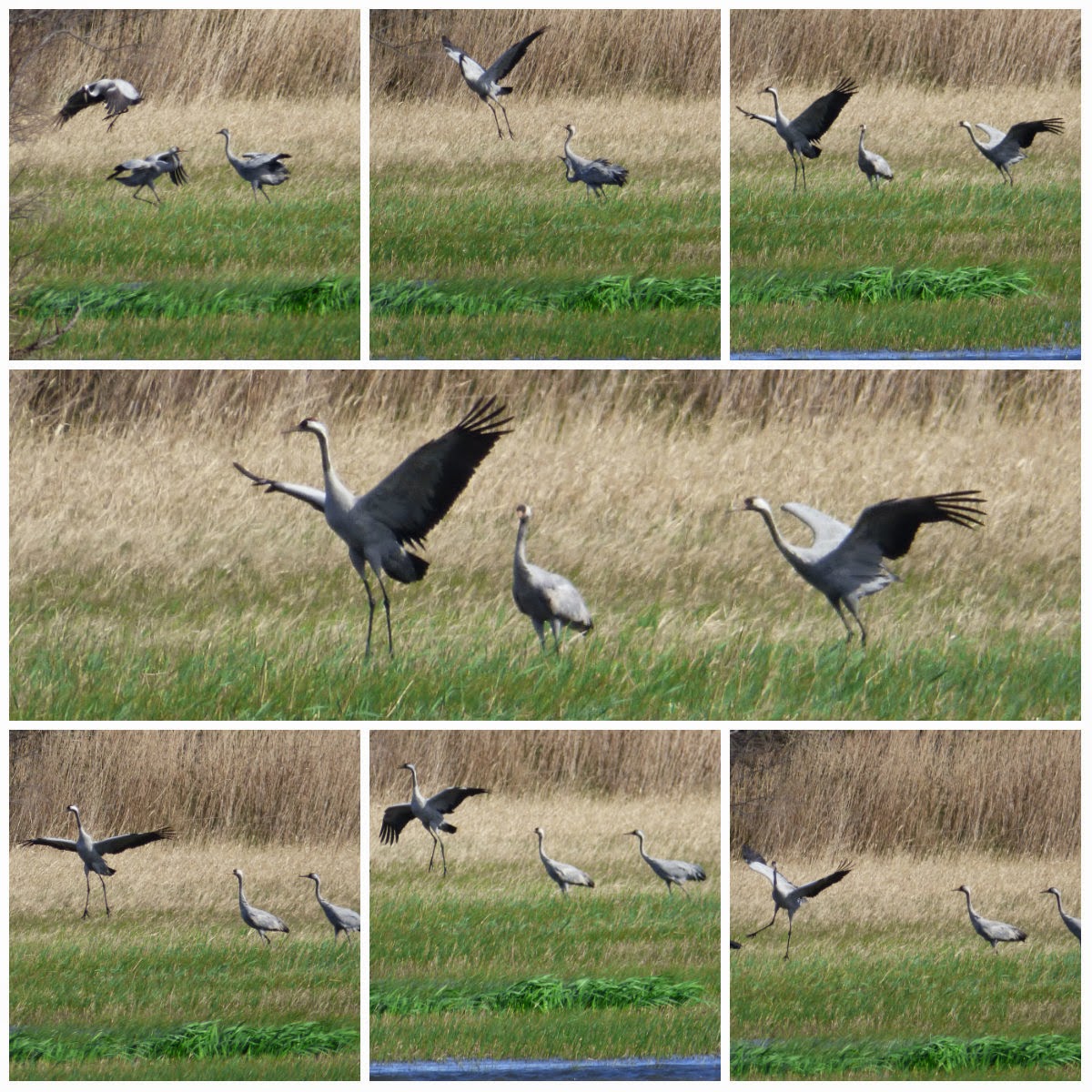
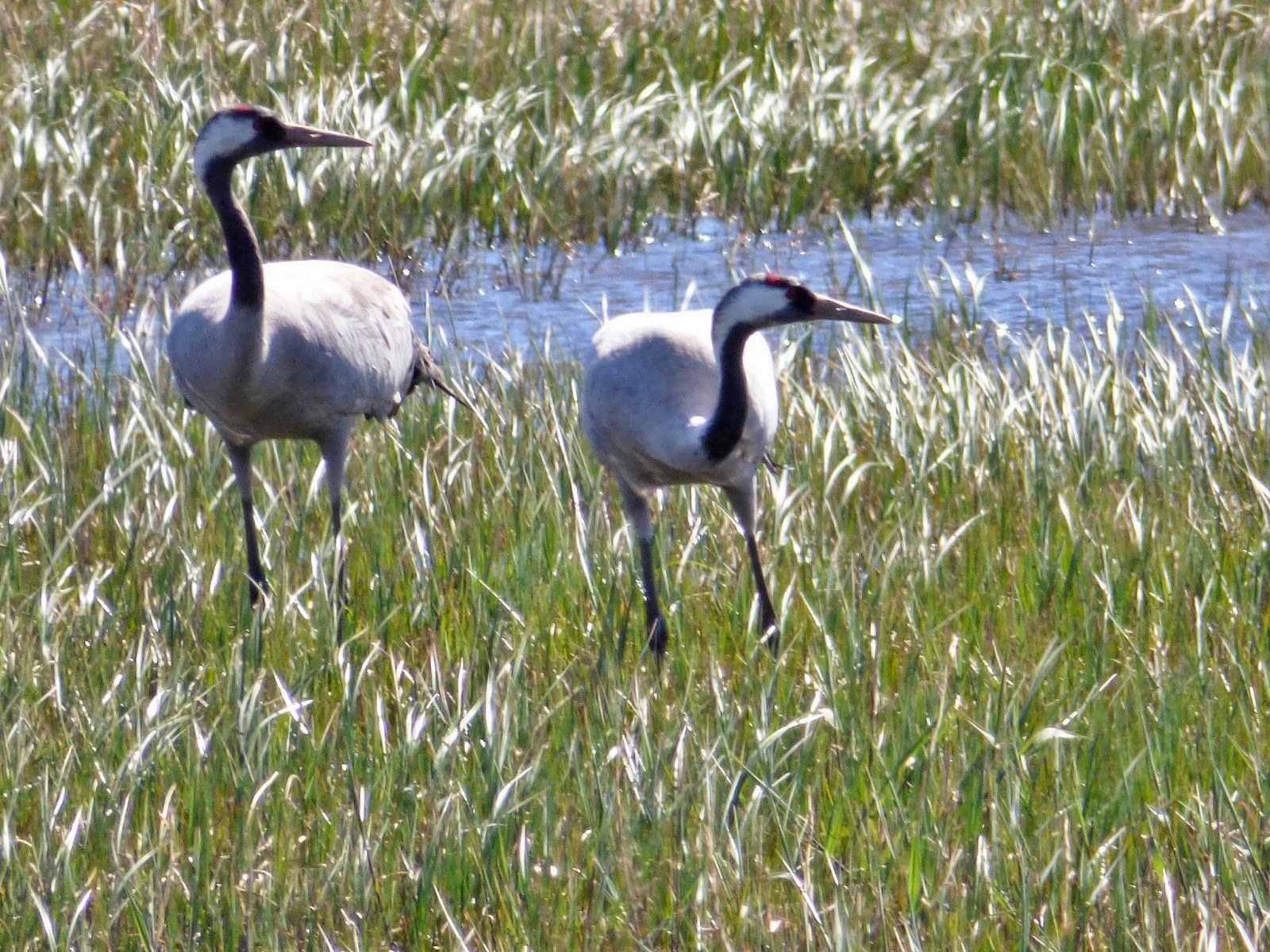
Com sabeu, ens trobem en plena migració, un període especial en el qual tots els observadors d'ocells anem com bojos amunt i avall amb càmeres i prismàtics. Jo, evidentment, no m'he quedat a casa. Les últimes visites als Aiguamolls han sigut genials, i algun cop m'he emportat algun amic, a veure si n'aprenen una mica. Per començar, he vist espècies considerablement rares, com el becplaner (Platalea leucorodia) o la grua (Grus grus), i no pas en baix nombre. Un dia vaig veure 13 becplaners junts al primer aguait del parc! A més, també vaig veure cap a 20 grues, i estic molt satisfeta amb les fotos que vaig aconseguir, després de canviar d'aguait per veure-les de més a prop. Per si això no fos poc, vaig poder veure com ballaven. Totes les grues del món ho fan, però no se sap del cert perquè. Fan salts i agiten les ales, i la veritat és que és impressionant!

As you all know, we are in full migration time. It's a really special period and all the birders go up and down like crazy with the camera and binoculars. Of course, I was not at home. The last visits to the Aiguamolls Nature Park have been incredible. I took some friends with me, see if they learn something. To start, I want to say that I have seen many rare species, like the Common Crane (Grus grus) or the Eurasian Spoonbill (Platalea leucorodia). One day I saw like 13 spoonbills together in the park! I also saw about 20 cranes, and I'm so happy with the photos I took! If this were not enough for me, I had a really pleasant surprise: the cranes started to jump and flap their wings, doing the amazing dance of the cranes. All the cranes of the world dance, but anyone know for sure why. The spectacle was amazing!


 L'espectacular dansa de les grues!
The cranes dancing!
 Platalea leucorodia


Grus grus

Pel que fa als anseriformes, aquest cop no és una oca pradenca, però l'observació de dues oques egípcies (Alopochen aegyptiacus) que semblen voler criar als Aiguamolls tampoc està malament. Estaven recollint branquetes i portant-les a una espècie de niu, molt a prop de l'aguait!

Regarding to the Anseriformes, I have also done a cool observation. It isn't as rare as the Bean Goose but...seeing two Egyptian geese that seem to want to breed at the park for first time isn't that bad. They were picking little twigs and putting them in something that looked like a nest!


Des de la torre del Matà, el resum d'espècies vistes també passa del normal: gambes roges vulgars (Tringa totanus), batallaires (Philomachus pugnax), tètols cuanegres (Limosa limosa), valones (Tringa glareola), territs menuts i variants (Calidris minuta i alpina), capons reials (Plegadis falcinellus), cames-llargues (Himantopus humantopus)...tot un festival d'ocells.
Si anem avançant cap a la platja del parc, espècies com el fumarell carablanc (Chlidonias hybridus), una espècie que apareix sobretot en migarció, o la xivitona (Actits hypoleucos), també estival i migradora, apareixen un any més. A més a més, vaig veure una àliga pescadora (Pandion haliaetus)! Feia molt que no observava l'espècie.

From the Matà Tower, the species I saw were more than the ordinary: Common Redshanks (Tringa totanus), a Ruff (Philomachus pugnax), Black-tailed Godwits (Limosa limosa), Wood Sandpipers (Tringa glareola), Little Stints and Dunlins (Calidris minuta and alpina), lots and lots of Glossy Ibis (Plegadis falcinellus), Black-winged Stilts (Himantopus humantopus)...a bird festival.
Nearer to the beach, the Whiskered Terns (Chlidonias hybridus), a species that appears moslty during migration, or the Common Sandpiper (Actits hypoleucos), also a summer and migratory species, appear one more year. I also saw an Osprey (Pandion haliaetus)! This eagle is pretty rare, so I was excited!


Alguns dels ocells que vaig veure des de la Torre del Matà.
Some of the birds I saw from the Matà tower.


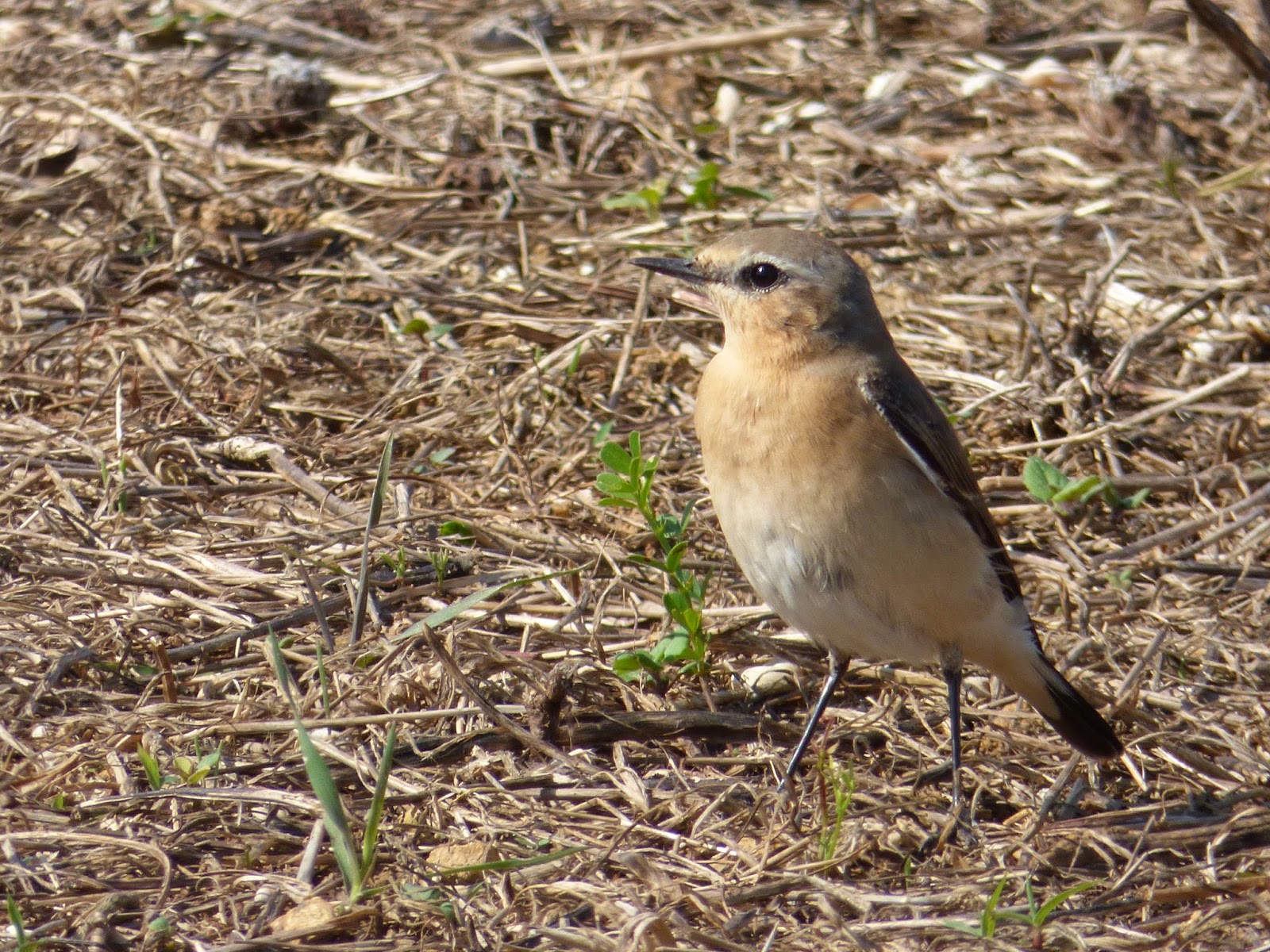
Però no fa falta visitar un parc natural per veure ocells durant la migració: davant de casa mateix et pots endur sorpreses ben agradables, com aquest còlit gris (Oenanthe oenanthe) que vaig veure ahir. Vaig fer les millors fotos d'aquesta espècie que havia fet mai. Per a molts professionals i aficionats a l'ornitologia, no són les orenetes les que marquen l'inici de la primavera amb la seva aparició, és el còlit gris el que ho fa. De fet, són uns ocells increïbles. Sabíeu que que aquests petits ocellets són capaços de recórrer uns 24000 km durant la migració? Els exemplars del nord d'Amèrica hivernen a l'Àfrica i en el viatge de tornada volen aquesta increïble distància.

Però jo, quan comença la primavera, sempre miro quin dia veig la primera oreneta. Aquest any ha estat el dia 15 de març.
A més, des del jardí de casa vaig veure el primer milà negre (Milvus migrants)de l'any i dos grups de cap a 100 corbs marins grossos (Phalacrocorax corbo) migrant! Les fotos són espectaculars:

But it isn't necessary to visit a nature park to see some interesting birds during migration: in front of your house you can take very pleasant surprises, such the Northern Wheatear (Oenanthe oenanthe) I saw yesterday. I took the best photos of this species I had ever done. For many professional and amateur ornithologysts the swallows aren't the birds that mark the beginning of spring with its appearance, the wheatear is wich does it. In fact, these birds are amazing. Do you know that these little birds are able to fly about 24,000 km during migration? The North-American specimens fly to Africa in winter, and then is when they fly this amount of km. 

But, when spring begins, I always try to see the first swallows of the year. This year I saw the first one on the 15th of March. 
Apart from the backyard I also saw the first Black Kite (Milvus migrants) of the year and two groups of more than 100 Great Cormorants (Phalacrocorax corbo) migrating! The photos are spectacular:


 Phalacrocorax corbo

Oenanthe oenanthe


diumenge, 2 de març del 2014

Esbossos

El proper dissabte vaig a un cens de marines de l'APNAE, a la Badia de Roses, i com que un punt difícil en d'identificació d'ocells poden ser els juvenils de gavina, vaig decidir dibuixar-los jo mateixa. Aquesta és una bona manera de memoritzar els diferents plomatges. Vaig esbossar dues espècies: la gavina riallera o vulgar (ara Chroicocephalus ridibundus, abans era Larus ridibundus), i la gavina capnegra (Larus melanocephalus), en plomatge juvenil durant el primer hivern i primer estiu en la primera espècie i el primer i segon hivern en la segona. Per fer-ho vaig fer un primer dibuix en llapis i després vaig donar color als dibuixos amb llapis aquarel·lables. També aprofito per penjar un altre dibuix, aquest cop es tracta d'un curroc (Gelochelidon nilotica). Vaig fer servir la mateixa tècinca.

Aquest va ser el resultat:

Next Saturday I'll go to a census of seabirds in the Bay of Roses, as a difficult point in identification of birds may be juvenile seagulls, I decided to draw them myself to learn it a bit better. This is a good way to memorize the different plumages. I drew two species: the Black-headed Gull (Larus ridibundus) and the Mediterranean Gull (Larus melanocephalus) in their juvenile plumage during the first winter and first summer in the first species and the first and second winter in the second. At first, I made a drawing in pencil and then I colored it with watercolor appeal. I also post another drawing from last December, it's a Gull-billed Tern (Gelochelidon nilotica), where I used the same tecnique.

Here you have the result:

Les gavines (la que vola pertany a la gavina riallera)
The seagulls (the one wich is flying is a Black-headed Gull)

Aprofito l'entrada per recomanar un altre llibre, aquest cop especialitzat en marines. Es diu "Aves Marinas: una guía de identificación", de Peter Harrison, amb un pròleg de Roger Tory Peterson. Hi trobem totes les espècies marines del món, amb il·lustracions molt detallades on es mostren tots els plomatges de cada espècie.

I take this post to recommend another guide, this time a seabirds one. It's called "Seabirds: and idetification guide", from Peter Harrison, it has got a foreword from Roger Tory Peterson. In it we find all the seabird species of the world, with detailed ilustrations wher you can see all the different plumages of each species.


L'edició anglesa de la guia:
The english edition of the guide:

dissabte, 15 de febrer del 2014

Pit-roig (Erithacus rubecula)

Aquí us deixo unes altres fotos meves. Espero que us agradin!
El pit-roig (Erithacus rubecula) és un ocell comú per tot Europa. S'adapta fàcilment i pot viure en qualsevol tipus d'ambient. També és fàcil d'atreure a les menjadores. Perquè vinguin a la meva menjadora hi tinc llavors, que poden ser barreges especials, civada...també li agrada el pa i la fruita seca. Per complementar hi poso fruita (poma o pera). És un ocell petit, mesura uns 13-14 cm, i té el plomatge discret, només ressalten la gola i el pit, de color taronja.

Vaig editar la primera foto, però només els ajusts bàsics, perquè era una mica borrosa. Per fer-ho vaig fer servir la mateixa Galeria Fotogràfica de Windows Live, que serveix per ajustar exposició i color. També pots arribar a retocar el contrast, però pels ajusts més elaborats (com selecció de color) recomano el Gimp, funciona molt bé i és gratis (cosa bona), però és difícil de fer servir (cosa no tant bona).

Doncs aquí teniu les fotos, què en penseu?

Here I left you two other photos from me. Hope you like them!
Like its name says, the European Robin (Erithacus rubecula) is a common bird in Europe. It can live in different types of habitat. It can be also easily attracted to bird-feeders. To attract them to my feeder, I use different types of seeds, bread and dried fruits. To complement it, I also put fruit (apple or pear, for example). It's a tiny bird, it is about 13-14 cm Its feathers are brown and discreet, but it has a beautiful orange on its chest and throat.

I edited the first photo, but only the basic settings, cause it was a bit blurred. I used the Windows Live Galery, you can use it for the basic editing like exposure or color. It is also good for the contrast, but to do more ajustments like the selective color, it's better to use Gimp. It works so good and it's free (wich is great), but it's a bit difficult to use (not that great).

Anyway, here you have the photos, what do you think about them?


Per cert, si algú sap algunes llavors que ajudin atreure caderneres, us ho agrairia, ja que no hi ha manera que vinguin a la menjadora. Gràcies!!

Btw, if anyone knows any seeds that help to attract European Goldfinches (Carduelis carduelis), please tell me, cause they don't come to my feeder. Thanks!!

dilluns, 10 de febrer del 2014

Última adquisició

Aquesta setmana he estrenat la guia "Aves", de l'editorial Blume. A la guia hi apareixen totes les aus d'Europa, i la veritat és que és molt completa. Et dona la informació bàsica: mides, pes i distribuició, a més de dades sobre l'hàbitat, l'alimentació, el cant, la presència segons l'època i la reproducció de l'ocell. A més, en algunes espècies, hi apareix un patró de vol i una curiositat. Pel que fa a la descripció, és molt detallada, de manera que ajuda molt en espècies que costen més d'identificar. Per evitar confusions, apareix l'espècie més similar a l'extrem de la pàgina, i els trets per diferenciar-los. També es dóna una imatge i diferents il·lustracions de cada ocell.
El llibre està en castellà, però apareix el nom de cada ocell en català, gallec, castellà i basc.
Tot i això, no és una guia de camp, ja que és bastant gros. L'ideal és complementar-lo amb una guia més petita. Jo recomano la "Guia de camp dels països catalans i d'Europa". Jo tinc l'última edició en català, i va de meravella. Apareixen il·lustracions de cada ocell i una explicació, més o menys com a l'altre llibre, però més resumit.
Fins ara ja m'han servit moltíssim tots dos, us els recomano a tots.

I moltes gràcies a tothom, el blog està tenint moltes visites! Per la gent que viu als estats units, no estic gaire informada, però m'han dit que la "Field Guide to birds of N.A", de la National Geographic és bastant bona.

This week I got the guide "Aves", by the publisher Blume. In the guide there appear all the birds of Europe, and the truth is that it is really good. It gives you the basic information: size, weight and distribution. It also tells the habitat, food, singing and breeding of every bird. Moreover, in some species, there appears a flight pattern and a curiosity. Regarding the description it is very detailed, so that helps a lot with the species that are harder to identify. To avoid confusion, the most similar species appears on the page, and it tells how to identify them. There is also an image  and some ilustrations of each bird.
The book is in spanish, but it tells the name of every bird in catalan, galician, castellà and Basque.
However, you can't use is as a field guide, because it is quite large. The ideal is to complement it with a smaller guide. I recommend the "Guia de camp dels països catalans i d'Europa". I have the latest edition in Catalan, and it is so good. It includes ilustrations and data of each bird, more or less like the other book, but more condensed.
I have used both a lot, I recommend them to everyone.

And thanks to everyone, the blog is having many visits! For people who lives in the United States, I'm not really informed, but an american boy told me that the " Field Guide to Birds of NA", by the National Geographic, is pretty good.


divendres, 7 de febrer del 2014

Fotografia!

Vaig dir que penjaria fotos, així que aquí les teniu! L'ocell de les fotos és el trist (Cisticola juncidis). En català, també se l'hi pot dir brusac. El nom li ve del seu cant, que sembla pronunciar "trist, trist". Aquest ocellet és molt tímid i difícil de fotografiar, ja que s'amaga entre els canyissos. A més, fa uns 9-10 cm. Tot i això, aquests viuen a prop de casa meva i per això em resulta una mica més fàcil aconseguir fotos seves. Aquí us deixo el seu mapa de distribució a Catalunya, de la web de la Sioc. Podem veure que es troba bàsicament a les zones humides i per la costa, però també es poden trobar poblacions per zones més muntanyoses.


I said that I'll hang bird photos, so here you have two of them! That bird is called Zitting Cisticola (Cisticola juncidis). It's a really shy bird, so it's difficult to take photos of it, because it hides among the reed beds. It's also really small, it's about 9-10 cm. But these ones live near my house, so it's a bit easier to photograph them. Here I post the distibution map in Catalonia. It's from the side Sioc.cat. In it you can see that it usually lives near the wetlands and in the coast, but we can also find it in small groups in mountainous areas.


dijous, 6 de febrer del 2014

Les últimes rareses

Com que fa molt que no publico, farem un intensiu dels últims mesos. No és que no hagi vist res interessant, simplement estava ocupada amb els exàmens, la tornada a l'institut després de les vacances...així que no he publicat res. Pel que fa a les espècies més destacables, l'Oca pradenca (Anser Fabalis) dels Aiguamolls de l'Empordà ha sigut la millor. A més, també he tornat a observar les dues oques rialleres (Anser albifrons) i l'oca híbrida (Branta canadensis x leucopsis). Tot i això, en aquests moments ja no hi són. També cal destacar un becplaner (Platalea leucorodia), del qual en vaig poder fer unes quantes fotos, dos exemplars d'àliga calçada (Aquila pennata) en fase blanca, un dels quals vaig veure entre classes a l'institut, volant molt baix. També a destacar un estol de 40 grues (Grus grus) que va passar sobrevolant casa meva. A més, també cal destacar dues espècies noves per a mi, l'ànec carolí (Aix sponsa) i l'oca índia (Anser indicus). Aquestes dues les vaig veure en captivitat, en una granja. Més endavant hi aniré a demanar permís per fer unes quantes fotos.
Pel que fa a activitats a les quals he participat, destaco el cens d'hivernants de l'estany de Banyoles, podeu veure els resultats aquí.
A partir d'avui, publicaré més fotos i informació, ja que durant aquest temps he fet algunes fotos bones. Espero que us agradin i si voleu les podeu veure a la National Geographic Kids (NGK). Enllaç al meu perfil: http://kids-myshot.nationalgeographic.com/profile/20850. No totes són d'ocells, però crec que també s'han de provar altres temes, no?

I didn't post for some months, so I'll resume my last observations. I've seen some interesting birs, but I was just was busy with my exams, returning to highschool after the holidays ... so I haven't posted anything. This where some of the most amazing and rare species: the Bean Goose (Anser Fabales) of the Aiguamolls de l'Empordà, was the best. In addition, I have also seen both Greater White-fronted geese (Anser albifrons) that were in the Aiguamolls and the hybrid goose (Branta canadensis x leucopsis). However, in these moments are gone. Also note an Eurasian Spoonbill (Platalea leucorodia) , of which I could take a few photos, two Botted Eagles (Aquila pennata), one of which I saw between classes at school , flying very low. Also include a flock of 40 Common Cranes (Grus grus) flying over my house. In addition, note two new species for me, the Wood Duck (Aix sponsa) and Bar-headed goose (Anser indicus). I saw these two birds in captivity on a farm. Later I will go there to ask permission to make a few photos.
Regarding activities in which I participated, the census of wintering of Banyoles Lake is the most important one. You can see the results here.
Sine now, I'll post more photos and information and less observations, because during that time I made some good photos. Hope you like them and if you want you can see them in the National Geographic Kids (NGK). This is the link to my profile: http://kids-myshot.nationalgeographic.com/profile/20850.
Not all the photos are of birds, but I also have other things, right?

Anser fabalis

Ardea cinerea

Grus grus

dimarts, 19 de novembre del 2013

Oques rares als Aiguamolls

A principis de mes vaig anar als Aiguamolls de l'Empordà, situats al nord-est de Catalunya. El motiu de la visita era unes oca que feia dies que s'hi observaven. Es tractava d'un exemplar híbrid entre oca del canadà (Branta canadensis) i oca de galta blanca (Branta leucopsis), totes dues espècies rares a la Península. Així que vam arribar, vam anar a demanar al centre d'informació si s'havia vist l'exemplar híbrid. Allà ens van informar també de l'observació d'una nova espècie rara d'oca: l'oca riallera grossa (Anser albifrons). Al cap d'una estona ja érem a l'aguait de les Gantes amb l'equip muntat i a punt per detectar les oques. Les primeres que vam veure van ser les dues rialleres grosses. Estaven barrejades amb un grup d'oques vulgars (Anser anser), travessant l'aiguamoll nedant. Al cap d'un moment, vam localitzar l'oca híbrida, també entre les vulgars. Dues espècies rares en un dia!
A més d'aquestes oques, durant el dia vam poder observar altres espècies, més comunes però també interessants. Aquestes en són les més destacades: ànecs xiuladors, cullerots i grisets, un grup de becadells comuns, cignes muts, cigonyes blanques, flamencs, i, ja cap al capvespre un estol de limícoles que no vàrem poder identificar, segurament territs variants, a més d'un aligot comú i algunes gavines vulgars.

Si volguéssiu anar un dia a veure aquestes dues espècies, consta que encara es troben als Aiguamolls, així que ja ho sabeu.

At the first week of this month, I went to the Aiguamolls de l'Empordà, located in the north-east of Catalonia. The reason for the visit was a rare goose that was have seen a few days ago. It was an hybrid specimen between Canada Goose (Branta canadensis) and Barnacle (Branta leucopsis). Both species are rare in the Iberian Peninsula. When we arrived, we went to the information centre to ask for the hybrid specimen. There said to us that there was a new observation of another rare goose: the Greater White-fronted goose (Anser albifrons). A little time later we were on the lookout ready to see the geese. The first geese we saw were the two specimens of Greater White-fronted goose. They were mixed with a group of Greylag geese (Anser anser), swimming across the wetland. After a moment, we find the hybrid goose, also mixed with some Greylang geese. Two rare species in one day!
We also saw other species more common but also interesting. These are some of them: Eurasian Wigeons, Northern Shovelers and Gadwalls, a group of Common Snipes, Mute swans, White Storks, flamingos, and at the evening some waders that we couldn't identify, they were probably Dunlins. We could also see a Common Buzzard few Black-headed gulls.


If you want to go one day to the Aiguamolls to see these two species, they still in there, so you know.


Aquí us deixo algunes de les fotos del dia:

Here I left some of the photos of the day:


Anser albifrons

Branta leucopsis x canadensis

Phoenicopterus roseus

Cygnus olor

diumenge, 1 de setembre del 2013

El corb marí emplomallat

El corb marí emplomallat (Phalacrocorax aristotelis) és un ocell marí de color negre, amb una cresta sobre el cap que li dóna el nom. Reposa a les roques vora la costa i pesca peixos llançant-se dins l'aigua, on pot estar-hi molta estona, fins a 45 segons. Després, necessita assecar les plomes i reposar, i s'està altre cop sobre alguna roca. Vola amb el coll estirat, sempre a prop de la costa. És una espècie present, però mai gaire abundant a Catalunya. Vaig fotografiar aquests dos exemplars a L'Escala.


The European Shag (Phalacrocorax aristotelis) is a black sea bird, with a crest in the head that gives its name. It rests in the rocks near the cost and jumps into the water to fish. The Shag can be into the water up to 45 seconds. Then it needs to dry its feathers and rest, so it goes again to a rock. It flies with its neck stretched, always near the coast. The European Shag is a present species, but never very abundant in Catalonia. I photographed these two ones in L'Escala.


 El corb marí emplomallat jove és de color gris clar.
The juvenile European Shag is light grey.

Pica-soques blau

El pica-soques blau (Sitta europaea), és un passeriforme d'uns 14 cm de llarg, allargassat i compacte. Té un bec gris fosc, llarg i punxegut, i unes ungles fortes per poder enfilar-se pels troncs. Les parts superiors del pica-soques són gris-blavoses, i els flancs són de color d'ant pàl·lid, una mica rogenc. Presenta una franja negra des del bec fins a la nuca, i les plomes laterals de la cua també són negres, amb taques blanques, però només es poden veure quan vola d'arbre en arbre amb el seu vol ondulant i característic. Grimpa pel tronc dels arbres, tant cap amunt com cap avall, en espiral.
Així doncs, aquest petit pica-soques és un dels ocells més contrastats que podem trobar al seu hàbitat: el bosc. Habita sobretot en ambients boscans de muntanya mitjana i alta muntanya, i als Països Catalans també és present a l'hivern, se'l pot atreure fàcilment cap a menjadores, sobretot els anys de més fred. S'alimenta d'insectes, aranyes, i fruits secs, que pica amb el bec per trencar-los.
Jo vaig fotografiar l'exemplar de la foto a Olot, la setmana passada.

The Eurasian Nuthatch (Sitta europaea) is a little oird of about 14cm long, elongated and compact.
It has got a long, pointy, dark grey beak, and strong nails to climb trees. The tops of the woodpecker are bluish-grey, and the sides are reddish brown. It has got a dark stripe from the beak to the nape, and the lateral feathers of the tail are also black with white spots. They can only be seen when the bird is flying tree to tree, in its caracteristic undulating flight.

The woodpecker climbs the tree trunks up and down, spirally. So this little bird is one of the most contrasted birds we can see in it's natural habitat: the forest. It lives mainly in wild enviorments of upland and mountain. In Catalonia it is also present at winter, and can be easily to bird feeders, especially in colder years. It eats insects, spiders, and nuts that sinks with its beak to break them. Last week, I could photograph it in Olot. 


dilluns, 26 d’agost del 2013

Ocells marins: baldrigues, xatracs, currocs...

Hi ha molts ocells que viuen a alta mar, i que s'alimenten dels peixos que pesquen allà. Aquests ocells són difícils de veure des de la costa, però de vegades s'apropen a terra i es poden observar amb l'ajuda d'un telescopi. Tot i això, els dies de llevantada tenen tendència a apropar-se encara més a les platjes, i es poden observar fàcilment només amb uns prismàtics o bé a ull.

Ahir mateix, mentre era a la platja, vaig veure passar un ocell de la mida d'un gavià, amb el bec gruixut i groguenc, i les parts inferiors blanques. Era una baldriga cendrosa (Calonectris diomedea).
La baldriga cendrosa és un ocell de la família dels Procellariidae, que viu a alta mar i vola arran d'aigua. També és l'única baldriga present a Catalunya a l'estiu, de manera que no hi havia cap dubte de l'espècie de la qual es tractava. Ahir també vaig tenir la sort de poder observar altres ocells marins, com el curroc (Sterna nilotica), del qual en vaig veure dos exemplars, i el xatrac becllarg (Thalasseus sandvicensis), del qual en vaig observar i fotografiar un grup de tres exemplars.

Tots aquests ocells es van apropar tant a la platja perquè ahir era un dia de tempesta. El mar estava remogut i arrossegava peixos amb les onades fins ben a prop de la platja.

There are lots of birds which live at sea, and catch the fish they need to eat there. You can rarely see these kind of birds from the beach, but sometimes, they come near the coast and you can observe them with a telescope. However, the days of east wind, they tend to come near the coast, and it's easier to observe them with binoculars or without any equipment. For example, yesterday morning, when I was at the beach, I could see a bird of the size of a Herring Gull, with a thick, yellow beak and white underpants. This bird was a Cory's Shearwater (Calonectris diomedea).

The Cory's Shearwater is a bird of the family of the Procellariidae, who lives at sea and flies near the sea level. It's also the only present Shearwater in Catalonia at summer, so there was no doubt of the specie it was. Yesterday, I also can see others seabirds, like a Gull-billed Tern (Sterna nilotica), and a group of three the Sandwich Terns (Thalasseus sandvicensis). All these birds come near the beach because yesterday was a day of east wind. The sea was stirred, and took fishes near the beach with the waves.

Aquí us deixo la imatge del grup de xatracs becllargs:
Here I post my image of the group of Sandwich Terns:


dimecres, 7 d’agost del 2013

Anellament

El dia 3 d'agost, vaig anar a les Deveses de Salt a anellar ocells.
L'anellament consisteix en posar una petita i lleugera anella a la pota dels ocells, capturats anteriorment amb unes xarxes especials. També es fa un petit estudi de l'exemplar, es mesura l'ala, la P3 (tercera primària), es pesa l'ocell, es mira l'edat i el sexe, el greix i els músculs... Serveix per fer un seguiment de les espècies que viuen a un lloc concret: la taxa de mortalitat, natalitat, i també de les migracions de cada ocell, etc.
Els ocells que més es capturen són els tallarols de casquet, les merles i els pit-roigs, entre altres.
El dia 3, vam agafar aquestes espècies, a més de caderneres, tallarols capnegres, mallerengues carboneres, una cuallarga i blaves, gafarrons, rossinyols bord i comuns, verdums, una bosqueta vulgar...
A destacar es va anellar un xot, que després va ser re-capturat, dos picots garsers grossos adults (el mascle i la femella) i un mosquiter pàl·lid.


On August 3rd, I went to "Les Deveses de Salt" to do bird ringing.
Bird ringing consists in putting a small light ring on the leg of the birds previously captured in special nets. It's also a small study of the specimen. The wing and the P3 (third primary) are mesured and the bird is weighted. In bird ringing, it's also important to know the age and the sex of the bird, how fat it is... All this information is used to track the behaviour of the species that live in a concret place: it studies the mortality and birth rate, and also each bird migration, among others.
The bird that are caught more times are the Eurasian Blackcap, the Common Blackbird and the European Robin.
The 3rd of August we captured these species, and also European Goldfinches, Sardinian Warblers, Blue and Great Tits, a Long-tailed Tit, an European Serin, Cetti's Warblers, Common Nightingales, European Greenfinches, a Melodious Warbler...
The most interesant birds were an Eurasian Scops Owl, wich was later re-captured, two adult Great Spotted Woodpeckers (a male and a female) and a Western Bonelli's Warbler.


Otus scops


Dendrocopos major

Aegithalos caudatus

Phylloscopus bonelli

Hippolais polyglotta

Detall de la muda del picot garser. Es pot veure clarament que està
fent una muda completa, per tant, sabem que és adult.
Detail of the bird molt of the Great Spotted. We can clearly see that
it's doing a complete change, so we know it's an adult.