Durant les dues últimes setmanes de Juliol vaig tenir la oportunitat de participar al Environmental Studies Summer Youth Institute a Geneva (Nova York) gràcies al programa Joves i Ciència, finançat per la Fundació Catalunya La Pedrera. Voldria donar les gràcies a tots els responsables tant del JiC com de l’ESSYI, ja que, any rere any, fan possibles experiències com aquesta.
L’objectiu del programa és presentar el concepte de conservació a estudiants joves des de diferents perspectives. És per això que incloïa classes d’economia, filosofia i política, totes orientades a la preservació del planeta, els problemes associats a ella i les seves possibles solucions. El projecte es duu a terme als Finger Lakes, a l’estat de Nova York. La segona setmana, però, consistia en una acampada al parc natural dels Adirondacks, d’història i ecosistema tant increïbles com complexos. Es tracta, de fet, del parc natural més gran d’Estats Units, amb 46 cimes i 32000 metres de rius i corrents. La seva biodiversitat és extremadament rica. Les espècies més representatives d’ocells són la calàbria grossa (Gavia immer) i el pigarg americà (Haliaeetus leucocephalus). La calàbria és, en realitat, la principal espècie marcadora de la qualitat de l’aigua al parc, ja que els nivells de mercuri en la sang de l’ocell són també una mostra dels nivells en l’aigua. Altres espècies rellevants són l’ós rentador (Procyon lotor), el cérvol de Virgínia (Odocoileus virginianus), el porc espí nord-americà (Erethizon dorsatum) i l’ós negre americà (Ursus americanus). S’estan duent a terme programes de reintroducció per l’ant (Alces alces), el llop (Canis lupus) i el linx canadenc (Lynx canadensis) per a intentar salvar les poblacions amenaçades d’aquestes espècies autòctones.
 |
| Mniotilta varia |
 |
 |
| Bombycilla cedrorum |
 |
Colaptes auratus
Buteo lineatus
Cianocitta cristata
Tyrannus tyrannus
|
Durant el viatge, vaig tirar un total de 2044 fotos, fer al voltant de 40 bimbos, visitar un munt de localitzacions úniques i conèixer 35 persones increïbles. Vaig començar a observar ocells el primer dia només d’arribar a través de la finestra de l’habitació a la universitat, ja que el jet-lag no em deixava dormir. Llavors vaig poder veure ja algunes de les espècies més típiques en jardins, com el picot escapulari (Colaptes auratus), la mallerenga capnegrea americana (Poecile atricapillus) i la bosquerola groga (Setophaga petechia) –aquesta última va ser difícil d’identificar d’entre tots els mosquiters d’Amèrica, dels quals no n’havia vist mai cap (i després d’un vol de 8 hores i no dormir). Com que el campus era al costat d’un gran llac (Seneca Lake), ocells com el bernat americà (Ardea Herodias) o la gavina de Delaware (Larus delawarensis) eren sempre presents. Vaig quedar positivament sorpresa per la població estesa d’àliga pescadora (Pandion haliaetus) i per com de freqüent era!
Espècies constantment presents incloïen la griva americana (Turdus migratorius), la merla ala-roja (Agelaius phoeniceus), l'Spizella passerina i l’ocell sedós (Bombycilla garrulus). Així doncs, abans de marxar cap als Adirondacks, ja vaig poder veure i identificar un munt d’espècies al voltant del campus i durant les excursions. D’entre totes les observacions, les meves preferides van ser el tirà de l'est (Tyrannus tyrannus), el viri d'ull vermell (Vireo olivaceus), i el siàlid de l'est (Sialia sialis). La població d’aquest últim està actualment amenaçada bàsicament per culpa de la competència pels espais de cria que ofereix l’expansió del pardal comú (Passer domesticus), espècie invasora d’Europa. La observació més destacada va ser un martinet verd (Butorides virescens).
Durant l’acampada als Adirondacks, vam visitar el Lake Harris, el Horseshoe Lake i el Lake Hudson, on també vam dur a terme un estudi de l’aigua, la biodiversitat i el paisatge. A més a més, vam fer una ruta en canoa a través de les muntanyes, cosa que va proporcionar-nos no només la oportunitat de veure paisatges fantàstics sinó també una gran quantitat d’ocells. Entre ells, el meu preferit de tot el viatge: l’alció gegant nord-americà (Megaceryle alcyon). Va ser una llàstima no poder fer fotos mentre anàvem en canoa! Durant tot el viatge vaig anar veient les espècies americanes més característiques, com el pigarg americà (Haliaeetus leucocephalus), l'aligot d'espatlles roges (Buteo lineatus), el zopilot capvermell (Cathartes aura) o el xoriguer americà (Falco sparverius), com a exemples de rapinyaires.
 |
| Desmognathus ochrophaeus |
 |
| Archilochus colubri |
 |
| Butorides virescens!!!! |
Altres espècies destacables van ser el papamosques fibi gris (Sayornis phoebe), la griveta bruna (Catharus fuscescens) i el jonc fosc (Junco hyemalis), en addició a un grup de bosquetes zebrades (Mniotilta varia). Els últims dies encara vaig poder afegir algunes espècies més a la llista, incloent el durbec de pit roig (Pheucticus ludovicianus), el pardal melòdic (Melospiza melodia) i l’oca de les neus (Chen caerulescens). Per acabar, no vaig poder veure una gralla blava americana (Cianocitta cristata) fins els últims dies, però al final va sortir!
En resum, el meu primer viatge a Amèrica va ser una experiència definitivament inoblidable, i estaré sempre agraïda al personal de l’ESSYI. Sense la seva passió i esforç res d’això seria possible. Espero que el programa es segueixi duent a terme durant molts anys més.

During the last two weeks of July, I had the chance to attend the Environmental Studies Summer Youth Institute in Geneva (NY) thanks to the Joves i Ciència program, funded by La Fundació Catalunya La Pedrera. I would like to thank all the JiC and ESSYI staff who make projects like this one possible every year. The aim of the program is to present the concept of conservation from different perspectives to young students. As an example, we were given economical, philosophical & political oriented lectures, all in relationship with the environment, the problems that concern it and their respective possible solutions.
 |
| Larus delawarensis |
 |
| Antheraea polyphemus |
 |
| Sciurus carolinensis |
 |
Setophaga petechia
Sialia sialis
Sayornis phoebe
Pandion haliaetus
|
The whole project is developed in the unique location of The Finger Lakes, in Geneva (NY). The second week, though, consisted on a camping trip to the natural park of the Adirondacks, the history and ecosystem of which are as breath-taking as they are complex. The Adirondacks are, in fact, the largest natural park in the US, counting with 46 peaks and 32000 meters of streams and rivers. Its biodiversity is extremely rich, the most iconic bird species being the Common Loon (Gavia immer) and the Bald Eagle (Haliaeetus leucocephalus). The Loon is the principal water quality marker species, as the level of mercury in its blood can be representative of the levels in the water of the lakes. Other relevant species include the Racoon (Procyon lotor), the White-tailed Deer (Odocoileus virginianus), the North American Porcupine (Erethizon dorsatum) and the Black Bear (Ursa americana). Reintroduction programs for the Moose (Alces alces), the Gray Wolf (Canis lupus) and the Canada Lynx (Lynx canadensis) are currently under process, to try save the population of these threatened species found in declining population numbers.
I am truly grateful for the experience I could be a part of thanks to this program, in which I was challenged on a social, psychological and physical level. Living and working close to nature in an amazing environment, so far from home, made me see life from a different perspective. Also, I was lucky enough to be in a group of naturalists and students interested in nature, so I could spend a lot of time bird-watching and got help from an expert identifying the trickiest species (huge thank you to Professor Mark Deutschlander from the Howarth William Smith College!). It was such an awesome experience because nearly all of the species were different from the ones in Europe and therefore completely new to me. This is why I studied the whole Sibley’s guide before the trip (so I could be ready)!
For the trip, I took a total of 2044 photos, got around 40 ticks for my life-list, visited a hundred beautiful locations and met the most wonderful 35 people ever. I started looking for birds through the college’s room window the day I arrived as jet-lag wouldn’t let me sleep, and already saw some of the typical backyard birds, including the Northern Flicker (Colaptes auratus), the Black-capped Chickadee (Poecile atricapillus) and the Yellow Warbler (Setophaga petechia) –the last one got me puzzled trying to ID: America has a lot of warblers and I had never seen any of them (plus I was just off from an 8 hour plane ride).
As the HWS College (our residence for the stays) was next to the Seneca Lake, birds like the Great Blue Heron (Ardea Herodias) and the Ring-billed Gull (Larus delawarensis) where always around. I was also positively surprised by the large population of Osprey (Pandion haliaetus) and its widespread, common range!
 |
| Lithobates sylvaticus |
 |
| Spizella passerina |
 |
| Drosera rotundifolia: planta carnívora! / carnivorous plant! |
Constantly present species included the American Robin (Turdus migratorius), the Red-winged Blackbird (Agelaius phoeniceus), the Chipping Sparrow (Spizella passerina) and the Cedar Waxwing (Bombycilla garrulus). Before leaving for the Adirondacks trip, I could already see and identify a bunch of new species around campus and during the different forest hikes we had, my favourites being the Eastern Kingbird (Tyrannus tyrannus), the Red-eyed Vireo (Vireo olivaceus), and the Eastern Bluebird (Sialia sialis). Its declining population has started a protection campaign which includes habitat preservation and bird-house setting projects. The cause of the threat is the competence the House Sparrow (Passer domesticus), an invasive species from Europe, offers, taking up most of the Bluebird’s nesting spaces. One highlight was the sight of an adult Green Heron (Butorides virescens).
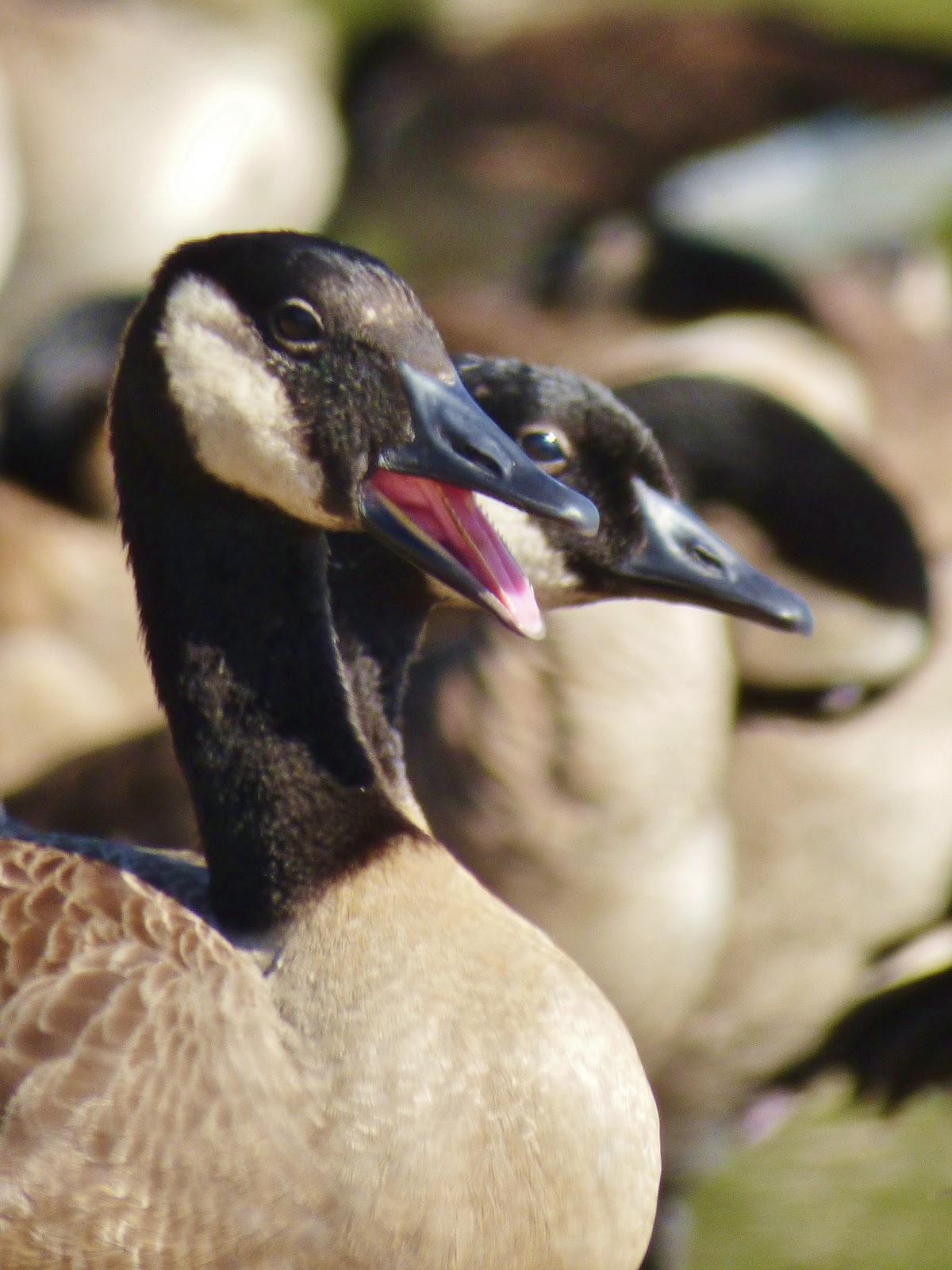 |
| Branta canadensis |
 |
 |
 |
| Chen caerulescens |
For the Adirondacks trip, I birded around the sites of Lake Harris, Horseshoe Lake and Lake Hudson, where we undertook a study of water, biodiversity and landscape. We also had a canoe trip across the mountains, which provided the sights of not only magnificent scenery but also some pretty rad birds, including my favourite one out of the whole trip: a Belted Kingfisher (Megaceryle alcyon). It was a shame not being able to use the camera while paddling on the canoe! During the trip I could get the perfect moments to birdwatch some of the characteristic American birds. Examples of raptors would be the Bald Eagle (Haliaeetus leucocephalus), the Red-shouldered Hawk (Buteo lineatus), the Turkey Vulture (Cathartes aura) or the American Kestrel (Falco sparverius). I also appreciated the presence of the Wild Turkey (Meleagris gallopavo), the Common Loon (Gavia immer), the Semipalmated plover (Charadrius semipalmatus) and the Red-breasted Merganser (Mergus serrator).
Even though, the bird I was most excited about was the Ruby-throated Hummingbird (Archilochus colubris), as I had never seen any species of hummingbird in the wild. I spent the days looking out for them until I could finally see and photograph a few individuals. Other remarkable species were the Eastern Phoebe (Sayornis phoebe), the Veery (Catharus fuscescens) and the Dark-eyed junco (Junco hyemalis), all along with a group of awesome Black and White Warblers (Mniotilta varia). During the last days of the trip I could still add a few more species to the list, including Rose-breasted Grosbeak (Pheucticus ludovicianus), Song Sparrow (Melospiza melodia) and Snow Goose (Chen caerulescens). In addition, I didn’t see a Blue Jay (Cianocitta cristata) until the very end!
 |
| Vireo olivaceus |
 |
 |
| Danaus plexippus |
All in all, my first time in America was such a memorable experience that I will never forget. I am forever thankful for everyone in the ESSYI that made it possible; any of this wouldn’t have been possible without their passion and effort, and I really hope the program can continue being held for many more years.
 |
| Gavia immer |


