Com sabeu, ens trobem en plena migració, un període especial en el qual tots els observadors d'ocells anem com bojos amunt i avall amb càmeres i prismàtics. Jo, evidentment, no m'he quedat a casa. Les últimes visites als Aiguamolls han sigut genials, i algun cop m'he emportat algun amic, a veure si n'aprenen una mica. Per començar, he vist espècies considerablement rares, com el becplaner (
Platalea leucorodia) o la grua (
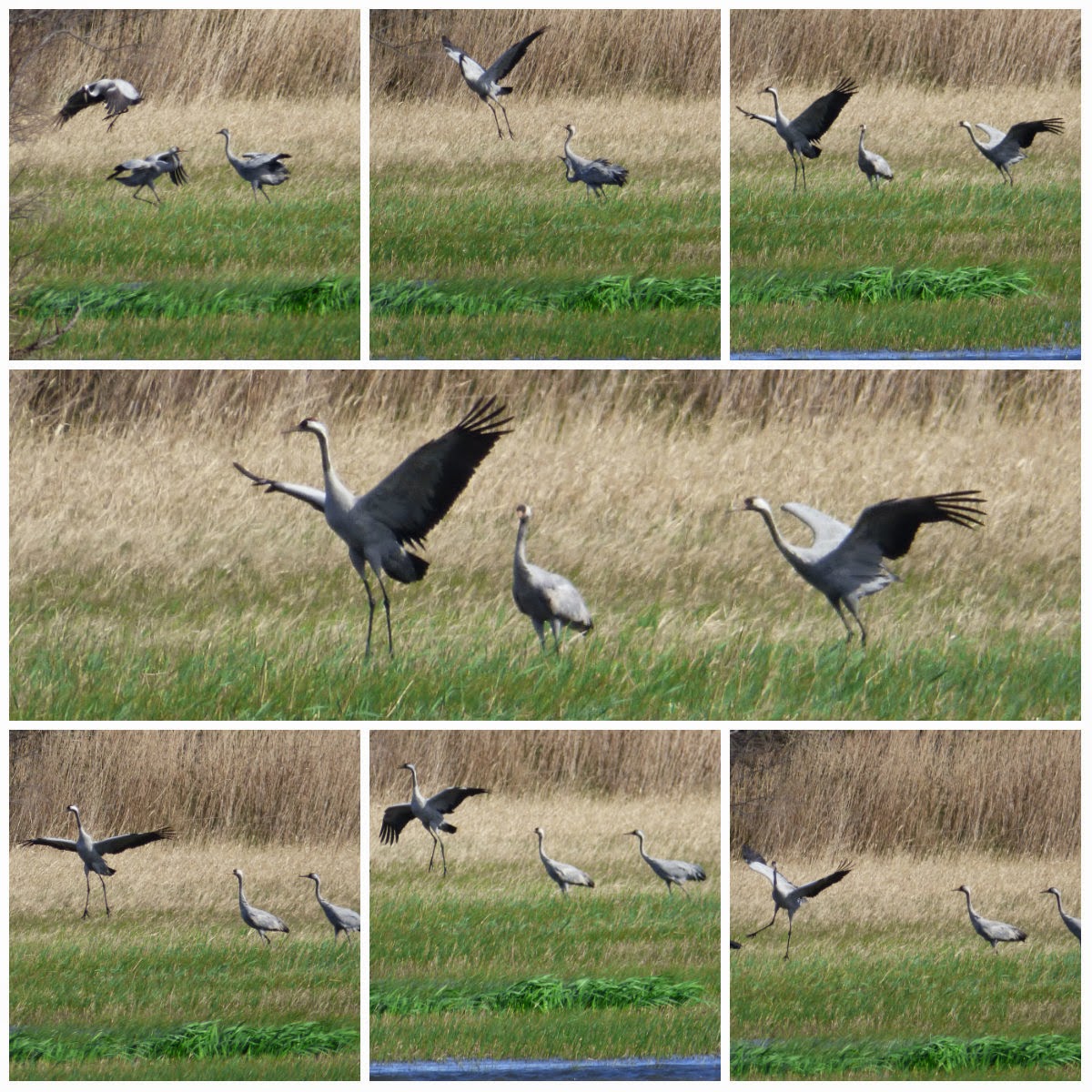
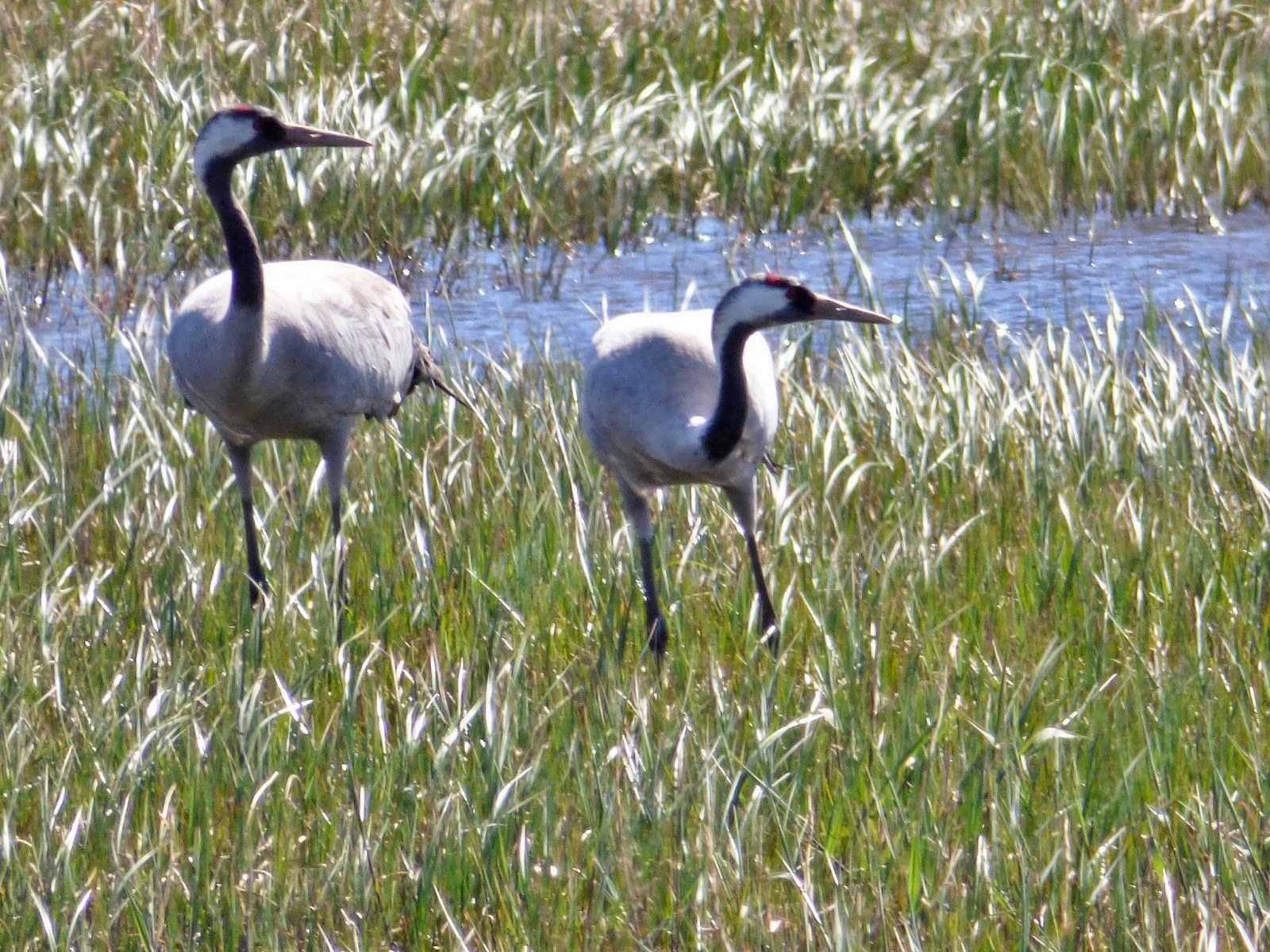
Grus grus), i no pas en baix nombre. Un dia vaig veure 13 becplaners junts al primer aguait del parc! A més, també vaig veure cap a 20 grues, i estic molt satisfeta amb les fotos que vaig aconseguir, després de canviar d'aguait per veure-les de més a prop. Per si això no fos poc, vaig poder veure com ballaven. Totes les grues del món ho fan, però no se sap del cert perquè. Fan salts i agiten les ales, i la veritat és que és impressionant!
As you all know, we are in full migration time. It's a really special period and all the birders go up and down like crazy with the camera and binoculars. Of course, I was not at home. The last visits to the Aiguamolls Nature Park have been incredible. I took some friends with me, see if they learn something. To start, I want to say that I have seen many rare species, like the Common Crane (Grus grus) or the Eurasian Spoonbill (Platalea leucorodia). One day I saw like 13 spoonbills together in the park! I also saw about 20 cranes, and I'm so happy with the photos I took! If this were not enough for me, I had a really pleasant surprise: the cranes started to jump and flap their wings, doing the amazing dance of the cranes. All the cranes of the world dance, but anyone know for sure why. The spectacle was amazing!
L'espectacular dansa de les grues!
The cranes dancing!
Platalea leucorodia
Grus grus
Pel que fa als anseriformes, aquest cop no és una oca pradenca, però l'observació de dues oques egípcies (
Alopochen aegyptiacus) que semblen voler criar als Aiguamolls tampoc està malament. Estaven recollint branquetes i portant-les a una espècie de niu, molt a prop de l'aguait!
Regarding to the Anseriformes, I have also done a cool observation. It isn't as rare as the Bean Goose but...seeing two Egyptian geese that seem to want to breed at the park for first time isn't that bad. They were picking little twigs and putting them in something that looked like a nest!
Des de la torre del Matà, el resum d'espècies vistes també passa del normal: gambes roges vulgars (
Tringa totanus), batallaires (
Philomachus pugnax), tètols cuanegres (
Limosa limosa), valones (
Tringa glareola), territs menuts i variants (
Calidris minuta i
alpina), capons reials (
Plegadis falcinellus), cames-llargues (Himantopus humantopus)...tot un festival d'ocells.
Si anem avançant cap a la platja del parc, espècies com el fumarell carablanc (Chlidonias hybridus), una espècie que apareix sobretot en migarció, o la xivitona (
Actits hypoleucos), també estival i migradora, apareixen un any més. A més a més, vaig veure una àliga pescadora (
Pandion haliaetus)! Feia molt que no observava l'espècie.
From the Matà Tower, the species I saw were more than the ordinary: Common Redshanks (Tringa totanus), a Ruff (Philomachus pugnax), Black-tailed Godwits (Limosa limosa), Wood Sandpipers (Tringa glareola), Little Stints and Dunlins (Calidris minuta and alpina), lots and lots of Glossy Ibis (Plegadis falcinellus), Black-winged Stilts (Himantopus humantopus)...a bird festival.
Nearer to the beach, the Whiskered Terns (Chlidonias hybridus), a species that appears moslty during migration, or the Common Sandpiper (Actits hypoleucos), also a summer and migratory species, appear one more year. I also saw an Osprey (Pandion haliaetus)! This eagle is pretty rare, so I was excited!
Alguns dels ocells que vaig veure des de la Torre del Matà.
Some of the birds I saw from the Matà tower.
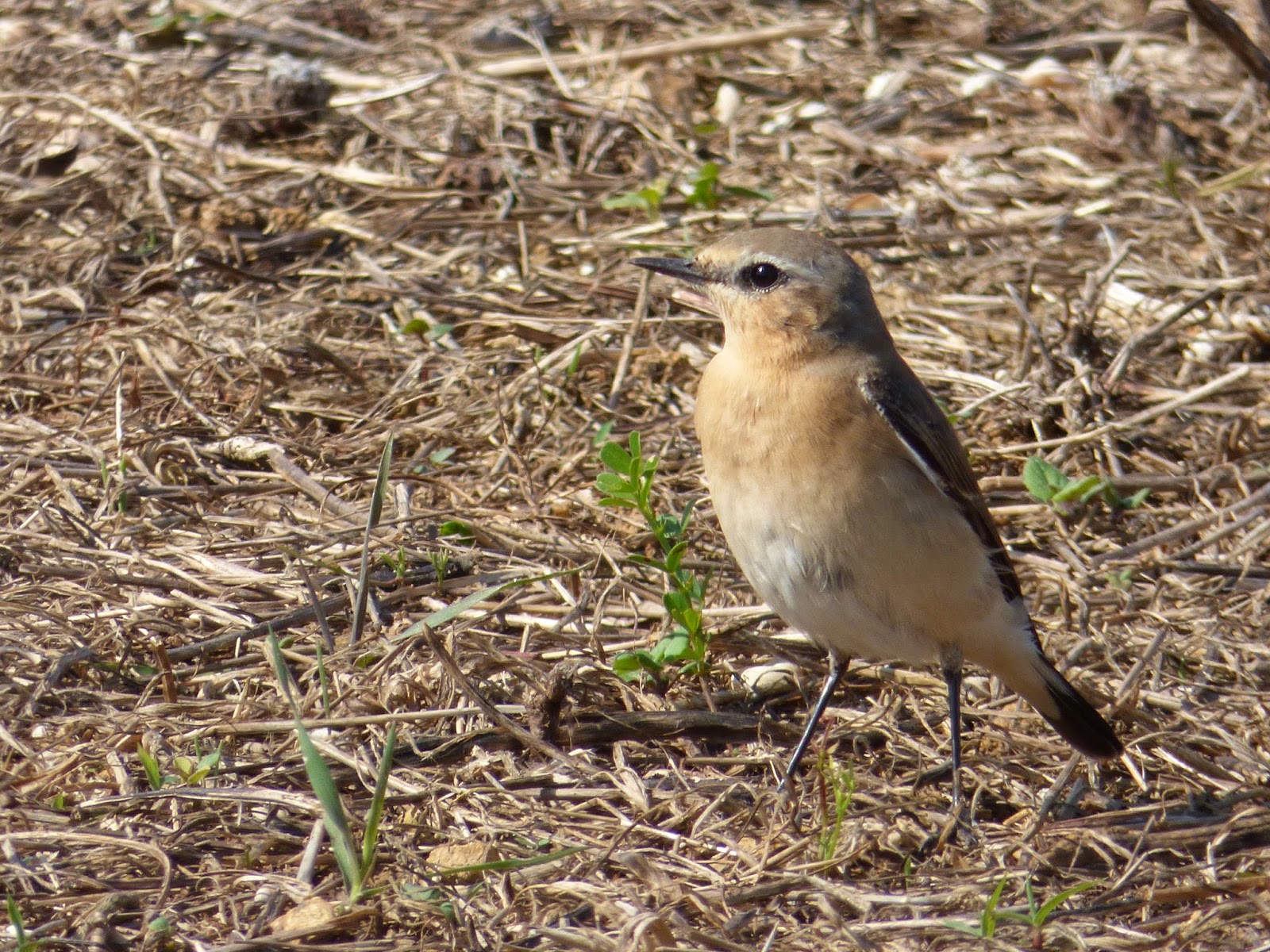
Però no fa falta visitar un parc natural per veure ocells durant la migració: davant de casa mateix et pots endur sorpreses ben agradables, com aquest còlit gris (
Oenanthe oenanthe) que vaig veure ahir. Vaig fer les millors fotos d'aquesta espècie que havia fet mai. Per a molts professionals i aficionats a l'ornitologia, no són les orenetes les que marquen l'inici de la primavera amb la seva aparició, és el còlit gris el que ho fa. De fet, són uns ocells increïbles. Sabíeu que que aquests petits ocellets són capaços de recórrer uns 24000 km durant la migració? Els exemplars del nord d'Amèrica hivernen a l'Àfrica i en el viatge de tornada volen aquesta increïble distància.
Però jo, quan comença la primavera, sempre miro quin dia veig la primera oreneta. Aquest any ha estat el dia 15 de març.
A més, des del jardí de casa vaig veure el primer milà negre (
Milvus migrants)de l'any i dos grups de cap a 100 corbs marins grossos (
Phalacrocorax corbo) migrant! Les fotos són espectaculars:
But it isn't necessary to visit a nature park to see some interesting birds during migration: in front of your house you can take very pleasant surprises, such the Northern Wheatear (Oenanthe oenanthe) I saw yesterday. I took the best photos of this species I had ever done. For many professional and amateur ornithologysts the swallows aren't the birds that mark the beginning of spring with its appearance, the wheatear is wich does it. In fact, these birds are amazing. Do you know that these little birds are able to fly about 24,000 km during migration? The North-American specimens fly to Africa in winter, and then is when they fly this amount of km.
But, when spring begins, I always try to see the first swallows of the year. This year I saw the first one on the 15th of March.
Apart from the backyard I also saw the first Black Kite (Milvus migrants) of the year and two groups of more than 100 Great Cormorants (Phalacrocorax corbo) migrating! The photos are spectacular:
Phalacrocorax corbo
Oenanthe oenanthe